The Ultimate Guide to Finding the Best eSIM for Your Next International Trip
Travelers often face the hassle of expensive roaming fees or finding local SIM cards upon arrival, which a best eSIM for travel eliminates entirely. This digital SIM activates instantly via a QR code, allowing you to connect to local networks in your destination without swapping physical cards. Its key benefit is seamless connectivity with affordable data plans, making it the simplest way to stay online abroad. Simply purchase a plan, scan the code on your phone, and you are ready to use maps, messaging, and apps immediately.
Why Your Next Trip Needs a Digital SIM
Your next trip needs a digital SIM because it transforms your phone into a hyper-local device the moment you land. The best eSIM for travel eliminates physical cards and airport kiosk queues, letting you activate a data plan before you depart.
You connect instantly to local networks, bypassing international roaming fees and throttled speeds.
This means live navigation, instant translation, and real-time hotel booking without hunting for Wi-Fi. You maintain your primary number for calls while a travel eSIM handles data, making it the only way to stay seamlessly mobile across borders.
What a virtual SIM actually does for your phone
A virtual SIM, or eSIM, eliminates the physical card slot entirely. It digitally stores your carrier profile on a secure chip inside your phone, allowing you to activate a local data plan before you even board the plane. This means you switch networks without swapping trays or risking the loss of your primary SIM. The technology essentially creates a dual-SIM capability with a digital second line, letting your home number stay active for calls while the eSIM handles all roaming data. Because the profile is software-based, you can change providers in minutes through an app, avoiding airport kiosks entirely.
Does a virtual SIM drain your phone battery faster? No, a virtual SIM has negligible impact on battery life because the modem communicates with the stored profile through the same radio hardware as a physical SIM; any perceived drain is usually from connecting to a weaker local tower, not from the eSIM itself.
The biggest benefits over physical plastic SIMs
The biggest benefits over physical plastic SIMs begin with instant activation; you can buy and install an eSIM before departure, arriving connected without hunting for a local vendor. Physical SIMs require fumbling with tiny trays and risk losing your home card. Digital SIMs let you switch between multiple travel eSIM profiles on your phone, avoiding new SIM purchases for each country. You also save roaming costs by choosing local data plans instantly, while your physical SIM stays intact for calls and texts.
Digital SIMs eliminate physical swaps, enable instant multi- country switching, and preserve your home SIM, making travel seamless.
How eSIMs cut roaming costs instantly
An eSIM eliminates traditional roaming fees by letting you purchase a local data plan from your destination’s network before you even board the flight. Instead of your home carrier charging inflated daily roaming rates, you instantly access a local provider’s infrastructure at fractional local-market prices. This bypasses international surcharges entirely, as the data is routed domestically. Even within minutes of landing, activating a prepaid eSIM replaces costly per-MB roaming with a fixed, low-cost allowance, effectively cutting expenses the moment you switch off airplane mode by using localized billing rather than your home carrier’s roaming tariff.
Who Offers the Most Reliable Coverage Worldwide
For travelers demanding the most reliable coverage worldwide, Airalo stands out by leveraging multiple Tier-1 networks in each region, automatically switching to the strongest available signal. Its global plan offers consistent connectivity across over 190 countries without requiring manual profile swaps. Holafly competes closely with truly unlimited data on native networks in Europe and Asia, though its speed may throttle in congested cities. Yet, for seamless performance across rural Australia or remote African safaris, Airalo’s prioritization of local network partners often delivers fewer dead zones. Both providers allow instant activation via QR codes, making them practical for multi-country trips where dropped connections aren’t an option.
Global providers with broadest network partnerships
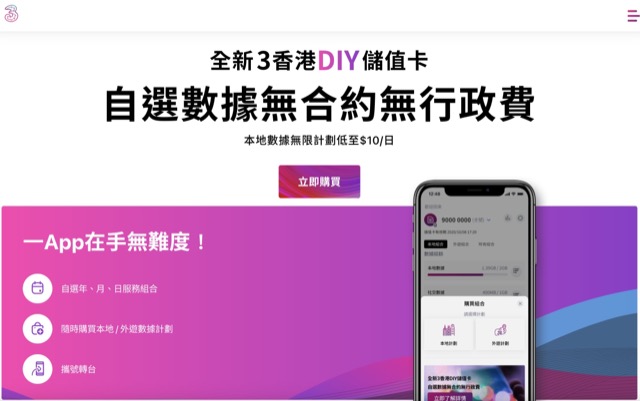
For travelers seeking the widest possible connectivity, global providers with the broadest network partnerships, like Airalo and Holafly, are your best bet. They stitch together dozens of local carriers under one eSIM, letting you roam across multiple countries without swapping SIMs. This is crucial for seamless multi-country travel, where your phone automatically hops between partners like T-Mobile in the U.S. or Three in Europe to grab the strongest signal. You just pick a regional or global plan and go.
Q: How do these global providers ensure coverage in remote areas? They don’t own the towers, but their dense partner network gives them access to major local players, so you’re rarely left without service.
Regional specialists for Europe, Asia, and the Americas
When evaluating who offers the most reliable coverage worldwide, regional specialists for Europe, Asia, and the Americas deliver superior performance by focusing on local network partnerships rather than global aggregators. In Europe, providers like Orange Holiday leverage dense intra-EU roaming agreements, while Asia-focused specialists such as Airalo prioritize major hubs like Japan and South Korea. For the Americas, US Mobile excels in North America, and operators like Claro offer robust pre-paid data across Latin America. These specialists often provide native IP addresses and better latency than global plans, though they require separate eSIMs per region.
- Europe specialists bypass throttling by connecting directly to local carriers like Vodafone or Deutsche Telekom.
- Asia regional plans typically include top-tier 5G in Singapore and Hong Kong, which global plans may deprioritize.
- Americas specialists offer single-country plans for Brazil or Canada, avoiding the high per-GB costs of multi-region SIMs.
Comparing network stability across different carriers
When comparing network stability across different carriers for travel eSIMs, the key metric is consistency of connectivity, not just speed. Global providers like Airalo and Holafly often rely on multiple local partners; thus, stability varies by region. A carrier stable in urban Europe may falter in rural Asia. Network stability across different carriers is best assessed by checking which underlying local network the eSIM will prioritize. For instance, in the US, T-Mobile’s network offers different stability than AT&T’s in remote areas. Q: Which carrier offers the most stable network for global travel? A: No single carrier wins everywhere; stability is location-dependent. The best eSIM for travel uses the most reliable local partner for your destination.
Pricing That Actually Saves You Money
For the best eSIM for travel, pricing that actually saves you money means avoiding per-MB roaming fees. Look for flat-rate regional packs, like a €30 plan covering 10GB across Europe, not individual country add-ons. Choose providers offering pay-as-you-go data that rolls over unused gigabytes. The real savings come from locking in a plan before departure, sidestepping carrier surcharges and unpredictable daily passes. Always compare the per-gigabyte cost against your actual usage—overbuying negates the value.
Pay-as-you-go plans versus regional data bundles

For unpredictable, multi-stop trips, pay-as-you-go plans offer unmatched flexibility, letting you top up only when data runs low. However, these per-MB rates often become expensive when consuming maps or streaming. Conversely, regional data bundles lock in a set GB for numerous countries at a fixed, lower cost per GB. The key savings emerge when your itinerary stays within a defined region like Europe or Asia; the regional data bundles strategy nearly always undercuts the cumulative cost of multiple pay-as-you-go refills, provided you accurately estimate your total data need beforehand.
Hidden fees and fair usage policies to watch for
When evaluating the best eSIM for travel, scrutinize fair usage policies to avoid throttled speeds after minimal data. A plan advertising “unlimited” data often includes a hidden threshold—commonly 500MB or 1GB at high speed, then drops to 128kbps, rendering maps and messaging nearly unusable. Watch for activation fees buried in the checkout flow, such as a “platform fee” or “top-up charge” that inflates the quoted price. Some providers also apply per-day connection fees even if you use no data, making short trips unexpectedly costly. Question: Do fair usage policies reset daily or over the entire trip? Daily caps are more restrictive, as they penalize heavy usage within 24 hours rather than allowing flexible consumption across your travel week.
Long-term travelers versus short-term tourists: which plan fits
For long-term travelers, a multi-gigabyte global eSIM plan with a 30-day or longer validity window usually offers the best per-day value, avoiding the high cost of frequent top-ups. In contrast, short-term tourists benefit most from a smaller, destination-specific data pack that covers just their trip length, as paying for unused days on a long-term rollover plan wastes money. The key differentiator is whether you need continuous data across multiple countries or a single, fixed window. Choosing a plan that aligns with your exact travel length—not your general habits—ensures you pay only for what you actually use, making the eSIM a cost-efficient tool rather than a recurring expense.
Check Before You Buy: Essential Features to Compare
When choosing the best eSIM for travel, always check data allowance versus validity period—a 10GB plan expiring in 7 days is useless for a month-long trip. Compare coverage maps carefully, as budget providers often use weaker partner networks. Always confirm if your destination is on a local or regional plan, not just global roaming. Q: How do I avoid throttled speeds? A: Japan eSIM Look for eSIMs that advertise “fair use” caps on high-speed data, then switch to a local provider for heavy streaming.
Data speeds: 4G, 5G, and throttling realities
When choosing the best eSIM for travel, do not assume “5G” guarantees blazing speed. Many providers cap 5G access to premium plans, leaving budget eSIMs locked to 4G. Throttling is the real pitfall; after using a small high-speed data allowance, your connection may drop to frustrating 2G-level slowness. A “high-speed” 5G plan with a 1GB soft cap offers worse real-world performance than a 10GB 4G plan that never throttles. Look specifically for unlimited data at 4G speeds without a hidden throttle, not just a network icon. The advertised generation matters far less than the plan’s sustainable speed limit.
Before buying, confirm the throttle threshold, not just the network generation. A consistent 4G connection beats a throttled 5G one every time.
Top-up options and plan extensions while abroad
When your data runs low mid-trip, the finest travel eSIMs offer frictionless plan extensions and instant top-ups, not a forced switch. Compare if the provider lets you add a 1GB boost from the app without re-entering payment details. Can you extend your current plan’s validity by 7 days if delayed, or must you purchase an entirely new package? The best platforms display your remaining balance and offer one-tap add-ons for data, talk, or time. Some lock you into fixed bundles; others let you customize precisely what you need on the fly.
| Feature | Flexible Top-Up | Rigid System |
|---|---|---|
| Data Boost | 1–10 GB increments | No partial top-ups |
| Plan Extension | Add days anytime | Full re-purchase required |
| Payment Saved | Yes, single tap | Re-enter card each time |
Customer support availability when things go wrong
When an eSIM fails to activate or data cuts out mid-trip, 24/7 live chat support becomes critical. Compare whether providers offer in-app troubleshooting tools, direct WhatsApp numbers, or phone hotlines with minimal wait times. Some eSIMs lack real-time assistance, relying solely on email, which can take hours. Prioritize services that provide immediate responses for urgent issues like top-up failures or profile corruption. A clear FAQ or automated bot can help, but human backup matters most during travel disruptions.
Reliable, round-the-clock support with live chat or phone access ensures quick resolution when eSIM connectivity fails during travel.
Device Compatibility Made Simple
Navigating device compatibility is the first hurdle to unlocking the best esim for travel. Device Compatibility Made Simple means instantly checking if your phone supports an eSIM before you buy, avoiding the frustration of a non-compatible handset. Most modern smartphones from Apple, Google, and Samsung released after 2019 are ready, but a quick compatibility scan on your provider’s app confirms your specific model. This process eliminates physical SIM tray hunting, letting you activate a data plan in minutes, not hours. By ensuring your device is eSIM-ready, you skip roaming fees and local SIM queues, making global connectivity truly seamless. Just verify your unlocked status and imei, and you’re set for instant, device-friendly travel data.
Which smartphones work with eSIM technology
For travel, eSIM-compatible smartphones include recent flagship models from Apple (iPhone XR and later), Google Pixel (3a and later), and Samsung (Galaxy S20 and later, excluding S20 FE). Most newer mid-range Androids, like the Motorola Edge series, also support eSIM. Always check your phone’s settings under “Mobile Network” for an “Add eSIM” option before purchasing travel data.

Apple iPhones from XR onward, Google Pixels from 3a, and Samsung Galaxy S20 series (except S20 FE) are primary eSIM-ready devices for travel use.
How to check if your phone is already unlocked
To confirm if your phone is ready for the best eSIM for travel, first open the Settings app and navigate to “Connections” or “Cellular.” Tap “Mobile Network” or “SIM Manager” and look for the option to “Add eSIM.” If this button appears, your device is likely carrier-unlocked. Alternatively, insert a SIM card from a different carrier; if it connects without an error message, your phone is unlocked. For a definitive answer, consider contacting your carrier directly. Verify device unlock status before purchasing an eSIM plan to avoid compatibility issues.
- Go to Settings > Connections > SIM Manager; “Add eSIM” indicates an unlocked phone.
- Insert a foreign SIM card; successful network registration confirms an unlocked device.
- Enter your IMEI into a dedicated carrier or third-party unlock-checking website.
- Contact your current carrier’s customer support to request an unlock status verification.
Activation steps for both iOS and Android users
Activating your eSIM for travel is a breeze on both platforms. For iOS, navigate to Settings, tap Cellular, then “Add Cellular Plan.” Scan your QR code or enter details manually, then label the plan (e.g., “Travel Data”). Android users head to Settings, select “Network & Internet,” then “SIMs” and “Add Carrier.” Scan the QR code or download via the carrier app. Both operating systems require you to confirm activation and set the travel eSIM as your default for data. Follow this clear sequence:
- Purchase and receive your travel eSIM QR code or activation link.
- Open your device’s SIM/eSIM settings.
- Scan or enter the activation details.
- Label and prioritize the plan for data usage.
- Toggle roaming on if needed and test the connection.
Customer Experiences That Reveal the Truth
When travelers share experiences, the truth about the best eSIM for travel emerges not from promises but from real-world connectivity. Users often reveal that a low-cost eSIM fails when they need
instant activation in a remote area, leaving them stranded without maps or communication
. Conversely, stories of seamless coverage across multiple countries highlight that reliable partnerships, not broad marketing, define true value. Glowing reviews often hide that some eSIMs throttle data after a few gigabytes, while negative feedback about sudden disconnections exposes which providers prioritize network stability. Practical accounts detailing easy QR code setup versus complex app logins separate genuine user-friendly options from those that frustrate upon arrival. Ultimately, these candid recollections of consistent signal strength and responsive customer support—or their absence—form the only reliable guide to choosing an eSIM that won’t betray a traveler in a critical moment.
Common complaints about connection drops at borders
A frequent complaint among travelers is that eSIMs fail precisely at border crossings, with data dropping the moment a new country’s tower is detected. Users report that switching between networks often triggers a silent disconnect that requires manual profile reactivation or a full device restart. The core frustration is unreliable network handover, where the eSIM does not automatically reassign a local partner carrier, leaving a dead zone for crucial navigation or messaging. Why does the connection drop specifically at borders? This usually happens because the eSIM’s preconfigured roaming partners have a delayed registration handshake with the new country’s infrastructure—a flaw that cheaper or poorly optimized travel eSIMs commonly exhibit.
Positive feedback from frequent flyers and digital nomads
Frequent flyers consistently praise eSIMs for eliminating the need to swap physical SIMs at every layover, with many citing instant connectivity upon landing as a critical time-saver. Digital nomads frequently highlight the ability to maintain a home number while adding a local data plan, avoiding missed messages from clients or banks. This seamless dual-SIM management is repeatedly called a “game-changer” for month-long stays across multiple countries. Common feedback notes that automatic carrier switching within a single eSIM app prevents the frustration of hunting for local vendors in unfamiliar airports.
“Frequent flyers and digital nomads affirm that eSIMs solve borderless roaming friction, with top providers earning loyalty through consistent signal and zero hidden fees.”
Reddit and forum insights on real-world performance
Deep dives into Reddit and travel forums reveal the real deal on performance, far beyond marketing claims. Travelers consistently praise Airalo for reliable city coverage but warn of slow speeds in rural areas. Holafly gets bonus points for unlimited data, though users report throttling after heavy daily use. To avoid surprises, check recent threads for your destination; a SIM that rocks in Japan might flop in Peru. Real-world feedback consistently flags hidden speed caps and flaky customer support during outages.
- Speed tests from users show Airalo often underperforms against local networks in remote zones.
- Forum posts highlight Holafly’s unlimited plan slows to a crawl after 500MB in a day.
- Reddit threads warn that Nomad eSIMs can fail to connect until you manually select a carrier.
Pro Tips for a Seamless Activation Abroad
For a seamless activation abroad with the best esim for travel, install your eSIM profile before departure while on Wi-Fi. This avoids relying on patchy airport connections. Upon landing, manually select a local network in your phone’s cellular settings to force immediate registration. If data doesn’t flow, toggle Airplane Mode for 30 seconds to refresh the connection. Always carry a screenshot of your eSIM’s QR code as a backup. For dual-SIM users, disable your primary line’s data roaming to prevent unexpected charges. These steps eliminate activation delays.
Installing your profile before you leave home
To avoid activation headaches abroad, install your eSIM profile before departure while you still have Wi-Fi. This step connects your device to the carrier’s network before you land, preventing a dead zone at customs. Once installed, the profile lies dormant until you reach your destination and switch it on. Do this at home because unstable airport or in-flight Wi-Fi can corrupt the download. Even if the activation is instant, scanning the QR code or entering the details while connected to reliable local internet ensures you’re ready to roam the second your plane’s wheels hit the tarmac.
Managing dual SIMs for local and home numbers
Juggling a home number and a local eSIM is simpler than it sounds. Set your travel eSIM as the default for mobile data to avoid roaming fees on your primary line. Keep your home SIM active for receiving SMS codes or banking alerts, but disable data roaming for that specific line in your phone settings. This lets you stay reachable on your home number without burning cash. Smart eSIM pairing means you can call back home via WhatsApp or FaceTime while using local data. How do I manage iMessage or WhatsApp with two SIMs? Simply register your app with your primary home number; your local data eSIM will handle all the heavy lifting for messages and calls.
Avoiding accidental data charges from your primary carrier
Before activating your travel eSIM, surgically disable your primary carrier’s cellular data from your device settings; even background app refreshes can trigger costly overage fees abroad. Switch your main line to “data roaming off” or remove its SIM card entirely to create a hard barrier. A single iMessage ping or weather update hitting your home network can undo your budget planning within seconds. Only keep your travel eSIM’s data line active to ensure every kilobyte runs through your pre-paid plan, not your primary carrier’s unpredictable rates.